
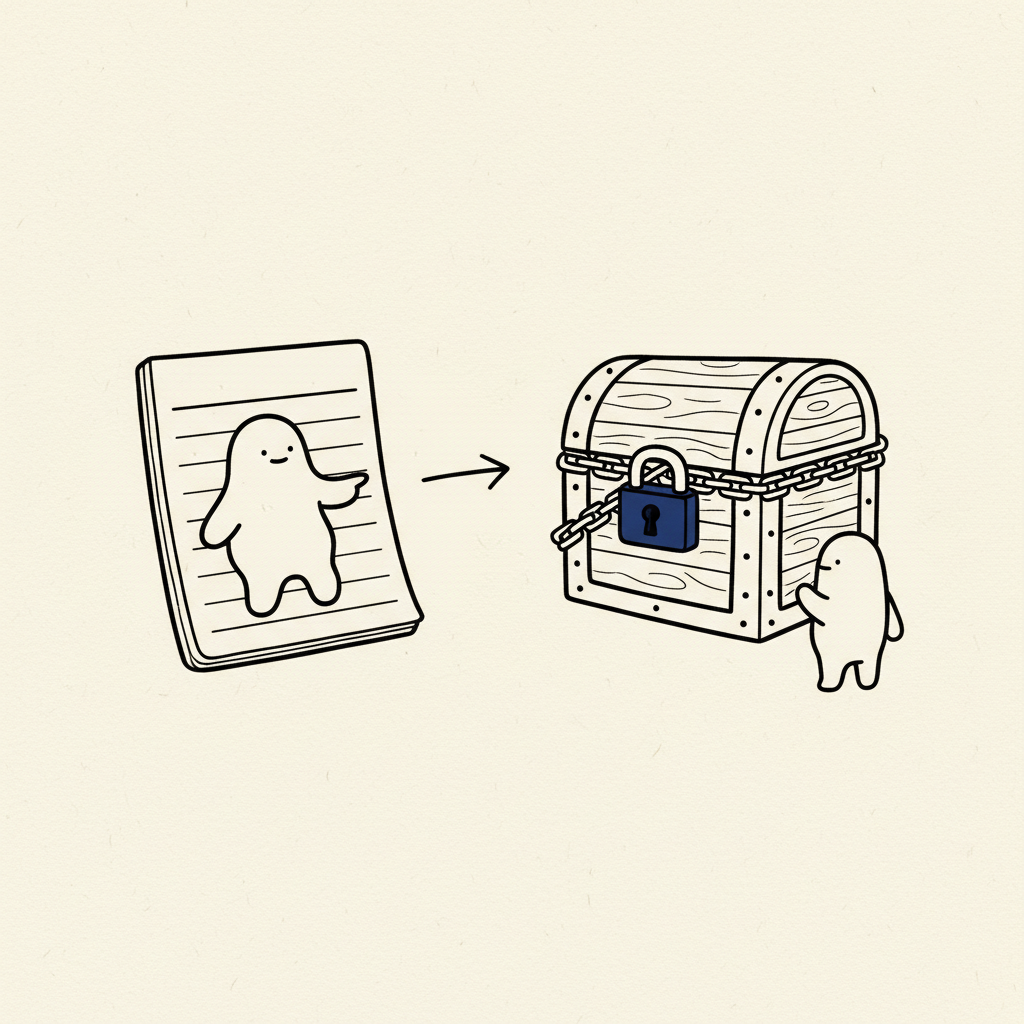
The Logging Illusion
Every AI governance platform promises audit trails. "We log every interaction." "Complete audit history." "Full traceability."
But there is a fundamental problem with logging: logs can be altered. A database record that says "Manager approved AI recommendation at 14:32" proves nothing if the database itself can be modified. Logs tell you what the system claims happened. They do not prove what actually happened.
As AI regulations tighten — the EU AI Act enforcement begins August 2, 2026, the Colorado AI Act on June 30, 2026 — regulators will not accept claims. They will demand proof.
This is the gap between audit trails and Decision Proof Units.
What Audit Trails Do
Traditional audit trails record events in a database:
| Component | What It Records |
|---|---|
| Timestamp | When an event occurred |
| Actor | Who or what triggered the action |
| Action | What was done (create, read, update, delete) |
| Data | What data was involved |
| Result | What outcome was produced |
This is valuable. It provides visibility into system operations. But it has three critical limitations.
Limitation 1: Mutability
Database records can be altered — by administrators, by software bugs, by malicious actors. Even "append-only" logs can be truncated or overwritten at the infrastructure level. If someone modifies a log entry, there is no way to detect the change from the log itself.
Limitation 2: No Proof of Human Review
An audit trail can record that a human user clicked "Approve." It cannot prove that the human actually reviewed the AI's reasoning before clicking. The difference between genuine oversight and rubber-stamping is invisible to a log file.
Limitation 3: No Decision Context
Logs record what happened but rarely capture why. When an AI recommends a treatment plan for a child with developmental disabilities, the log might show "recommendation generated." It does not capture the input data that led to the recommendation, the alternative options considered, or the reasoning chain.
What Decision Proof Units Do Differently
A Decision Proof Unit (DPU) is a cryptographically signed, immutable record of an AI decision and its full context. It goes beyond logging in three fundamental ways.
1. Cryptographic Immutability
Every DPU is hashed using SHA-256 and chained to previous records. If any record is modified after creation, the hash chain breaks — and the tampering is immediately detectable. This is not a database feature that can be turned off. It is a mathematical guarantee.
DPU Record:
├── AI Input (hashed)
├── AI Output (hashed)
├── Model Version
├── Timestamp (RFC 3161)
├── Human Reviewer ID
├── Review Action (approved / modified / rejected)
├── Modification Details (if any)
├── Previous Record Hash
└── Record Hash (SHA-256 of all above)
2. Proof of Human Oversight
A DPU captures not just that a human reviewed the AI output, but how they reviewed it:
| Scenario | What DPU Records |
|---|---|
| Manager approves AI recommendation without changes | Approval + timestamp + no modifications |
| Manager modifies AI recommendation | Original output + modified output + reason for change |
| Manager rejects AI recommendation | Rejection + reason + alternative action taken |
| No human review (automated) | Flagged as "auto-approved" with policy reference |
This distinction matters for AI Act Article 14, which requires "effective human oversight" for high-risk AI systems. A DPU can prove that oversight was genuine, not perfunctory.
3. Full Decision Context
A DPU preserves the complete context of an AI decision:
- Input data: What information the AI received
- Model state: Which model version produced the output
- Output: The AI's recommendation or decision
- Alternatives: Other options the AI considered (where applicable)
- Confidence: The AI's confidence level in its output
- Human judgment: What the human reviewer decided and why
Side-by-Side Comparison
| Capability | Audit Trail | Decision Proof Unit |
|---|---|---|
| Records events | Yes | Yes |
| Tamper detection | No (or limited) | Yes (hash chain) |
| Proves human review quality | No | Yes |
| Captures decision context | Partial | Full |
| Regulatory evidence grade | Supportive | Primary evidence |
| Storage immutability | Database-dependent | Cryptographic |
| Cross-system verification | No | Yes (hash verification) |
| Cost | Low | Moderate |
Why This Matters for Compliance
EU AI Act (August 2, 2026)
Article 50 requires AI systems to maintain transparency. Article 14 mandates human oversight for high-risk systems. Article 12 requires automatic recording of events ("logs"). But Article 73 goes further: it prohibits altering AI systems or their logs in ways that could compromise oversight.
An audit trail satisfies Article 12. A DPU satisfies Articles 12, 14, 50, and 73 simultaneously.
Colorado AI Act (June 30, 2026)
Requires deployers of high-risk AI to provide "a description of the purpose of the AI system" and maintain records demonstrating compliance. DPUs provide this documentation automatically.
GDPR Article 22
Automated decision-making affecting individuals requires the ability to explain and contest decisions. DPUs preserve the full context needed for explanation and contestation.
Real-World Example: Rehabilitation Center
A rehabilitation center uses AI to recommend therapy schedules for children with developmental disabilities.
With Audit Trail Only:
2026-04-13 09:15 | AI generated schedule recommendation for Patient #1247
2026-04-13 09:22 | Therapist Kim approved recommendation
With DPU:
DPU #8847291
├── Input: Patient age 6, diagnosis ASD, prior 12 sessions of speech therapy,
│         progress score 67/100, parent preference: morning sessions
├── AI Model: schedule-optimizer v2.3.1
├── Output: Recommended 2x/week speech + 1x/week sensory integration
├── Alternatives Considered: 3x/week speech only (confidence 0.71),
│                            2x/week speech + 1x/week behavioral (confidence 0.68)
├── Selected: 2x/week speech + 1x/week sensory (confidence 0.82)
├── Reviewer: Therapist Kim (License #KR-ST-2019-4421)
├── Review Time: 7 minutes 14 seconds
├── Action: Approved with modification (changed Monday slot to Wednesday)
├── Reason: "Parent works Monday mornings - schedule conflict"
├── Hash: a3f8c92d...
└── Previous Hash: 7b1e4f0a...
The first record tells you something happened. The second record proves what happened, why it happened, that a qualified human reviewed it, and that the record hasn't been tampered with.
When Do You Need DPU vs Audit Trail?
| Scenario | Audit Trail Sufficient | DPU Recommended |
|---|---|---|
| Internal analytics dashboard | Yes | No |
| Customer-facing AI chatbot | Maybe | Yes |
| AI-assisted medical/therapy decisions | No | Yes |
| Automated financial decisions | No | Yes |
| HR/recruitment AI screening | No | Yes |
| Regulatory-reported AI outputs | No | Yes |
| Public sector AI services | No | Yes |
If AI decisions affect people's rights, health, finances, or opportunities — you need proof, not just logs.
How Cronozen Implements DPU
Cronozen's Decision Proof Unit is built into every AI interaction on the platform.
- Automatic: No manual steps required. Every AI recommendation generates a DPU automatically.
- Hash-chained: SHA-256 hash chain ensures tamper detection across the entire record history.
- Human oversight capture: Records not just approval/rejection but review duration, modifications, and reasoning.
- Audit package export: One-click generation of compliance evidence packages for regulators.
- 5-year retention: Automatic record lifecycle management with regulatory retention compliance.
- API accessible: DPU records are accessible via REST API for integration with external compliance systems.
What is a Decision Proof Unit? → The Technical Foundation of AI Accountability
EU AI Act Compliance → EU AI Act Compliance Checklist
AI Decision Traceability → From Black Box to Verifiable Proof