
Korea Has Been Doing This Since 2007
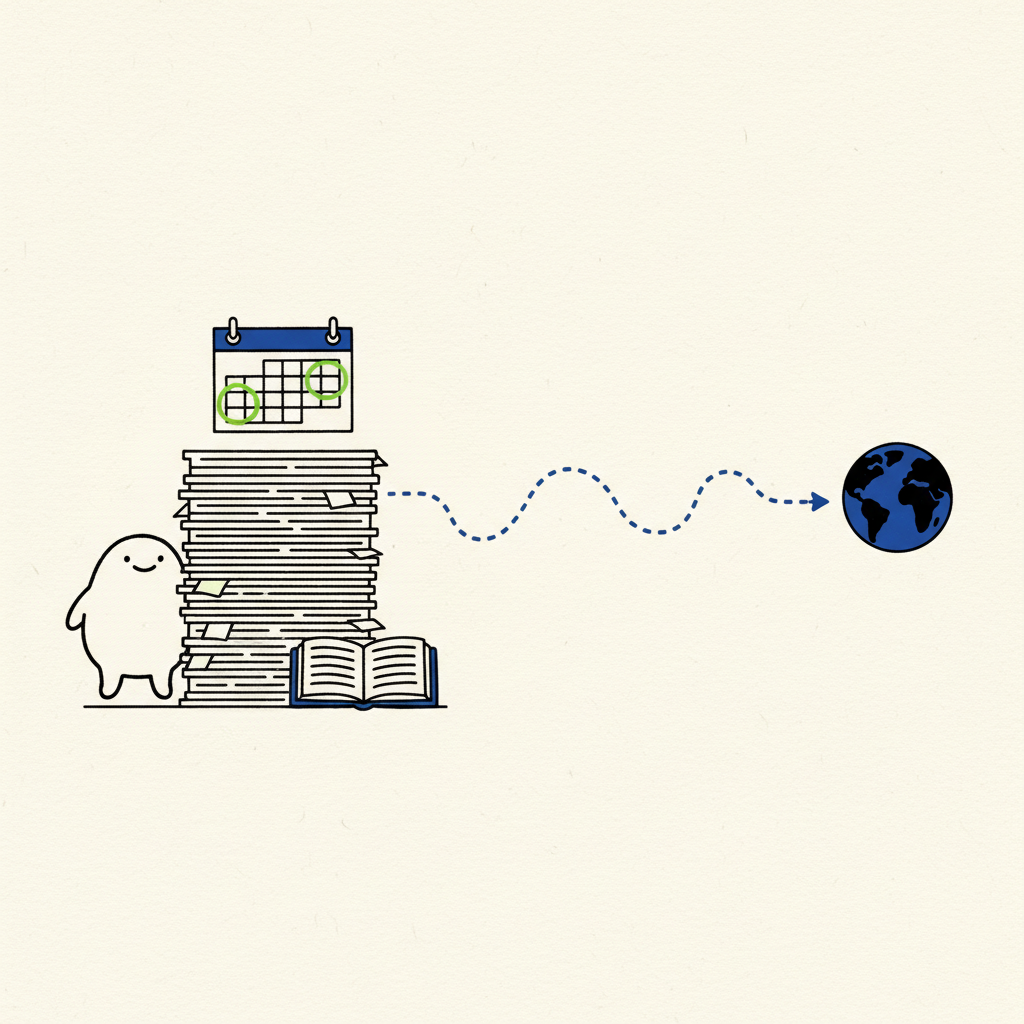
While Europe is debating CSRD timelines and the US is reshaping B Corp standards, Korea has quietly operated a mandatory, semi-annual social impact disclosure regime for nearly two decades.
Under the Social Enterprise Promotion Act (사회적기업육성법) Article 17, certified social enterprises in Korea must file a structured business report twice a year — every April and October. Late or false filings carry administrative penalties.
This isn't a voluntary framework. It's law. And it produces a population of operators who have, by necessity, mastered the operational mechanics of structured impact reporting.
For global B Corps preparing for V2.1 recertification, EU companies scoping CSRD, and US firms thinking about state-level ESG disclosure, the Korean experience offers tested lessons — not theory, not pilots, but a decade of real operations under audit.
This article distills three.
1. The Korean Model in Brief
Korea's social enterprise reporting structure has nine core domains:
| Domain | Content |
|---|---|
| Company Status | Legal form, certification, leadership |
| Democratic Governance | Board structure and meeting minutes |
| Employment | Total workforce, vulnerable-population share |
| Financial Performance | Revenue, dependency on government grants |
| Social Services | Beneficiary count and service detail |
| Community Contribution | Local partnerships, regional impact |
| Operating Performance | Revenue mix by business line |
| Government Grant Usage | Spending reconciliation against agreements |
| Voluntary Disclosure | Public-facing impact summary |
Filing cadence:
- April submission — full prior fiscal year results
- October submission — current year first-half results
This is roughly B Corp V2.1's seven Impact Topics plus structured financial reconciliation — except mandatory, frequent, and enforced. A useful natural experiment in what structured impact disclosure looks like at scale and over time.
2. Lesson One — Data Discipline Beats Reporting Skill
The single most consistent failure pattern among Korean social enterprises is not poor writing or weak strategy. It is data drift between the report body and the supporting documents.
The five attachments that most often trigger rejection by Korean regulators:
- Payroll ledger — employment numbers must match to the won
- Employment contracts — vulnerable-population status must be evidenced per individual
- Board meeting minutes — democratic governance must be substantiated with date, attendees, agenda
- Financial statements — finalized statements must match the report's financial section
- Social service activity evidence — photos, beneficiary records, partner confirmations
The pattern: every metric in the report needs a document behind it, and the document must not have drifted from the metric since reporting.
Lesson for B Corp V2.1 and CSRD: when the auditor exports your evidence per Impact Topic, the same drift problem will surface. Companies that pass cleanly will be those who treat their impact data the way Korean operators have learned to: as financial-grade evidence, not narrative.
3. Lesson Two — Reuse Across Frameworks Or Burn Out
Korean social enterprises don't just file the semi-annual business report. The same data feeds:
- SVI (Social Value Index) — a 14-indicator official scoring system. 'Excellent' grade unlocks procurement bonuses and credit guarantee benefits.
- Voluntary public disclosure — for transparency and stakeholder communication
- Procurement applications — for inclusion in the public-buyer priority procurement system
- Funding applications — for low-interest social-economy loans and grants
What Korean operators learned the hard way: if you maintain one canonical dataset, all five reporting endpoints become easy. If you maintain separate datasets per framework, you will fail eventually.
This maps directly to the B Corp / CSRD / GRI / ESRS convergence. The standards already overlap. Operators who structure their impact data once — at capture — and route it to whatever framework needs it will outpace those who run parallel reporting workstreams.
4. Lesson Three — Tamper-Evident Evidence Is Now a Competitive Wedge
Here is where the Korean experience gets interesting for global audiences.
The Korean Social Enterprise Promotion Agency increasingly audits not just the report but the audit trail. Inspectors ask:
- "When was this beneficiary record entered?"
- "Has the payroll ledger been modified since the reporting period?"
- "Can we see the board meeting minutes in their original form?"
For Korean social enterprises facing these questions, tamper-evident evidence is no longer optional. Operators who can show "this number was captured on this date, this evidence has not been modified since, and here is the cryptographic proof" complete inspections in days. Operators who can't spend weeks reconstructing.
The same dynamic is now arriving globally:
- B Corp V2.1 auditors will demand evidence export with full audit trail.
- CSRD reasonable assurance will require traceable data lineage.
- ISO 14064 climate verification expects source documentation with measurement methodology.
The operators who win in 2026 globally will be the ones who learned what Korean operators learned over a decade: the report is the easy part; the evidence chain is the work.
5. What Cronozen Built Out of This
Cronozen is a Korean AI platform that originally focused on AI governance — the requirement that AI decisions can be proven and reproduced. Our customer base includes a number of Korean social enterprises and welfare operators who pushed us toward a recurring requirement: prove what happened, not just describe it.
Out of that pressure, we built the DPU (Decision Proof Unit) — a cryptographic proof layer that hashes inputs, anchors AI invocations, and chains outputs into a tamper-evident record. Externally verifiable: third parties can hash your source data and check the chain themselves.
The pattern was developed for AI decisions in government-funded operations. We discovered it transfers directly to impact reporting evidence, because both face the same audit question: prove this happened the way you say it did.
For global organizations facing B Corp V2.1, CSRD, or other rigorous impact assurance, the Korean operational experience encoded in Cronozen's DPU is a transferable shortcut — not because Korea is special, but because Korea has been audited harder, longer. (For the same proof pattern applied to AI-generated impact reports, see the parallel article on verifiable AI evidence.)
6. Concrete Lessons You Can Apply Today
Three operational practices that any global organization preparing for stricter impact assurance can adopt now, without waiting for new technology:
Practice 1 — One canonical dataset per impact domain
Pick one source of truth for each impact metric. Do not let parallel spreadsheets accumulate. Korean operators who fail typically have three different payroll records by year-end.
Practice 2 — Capture evidence at the moment of activity
Korean operators learned to take a photo, file the contract, log the meeting the day it happened. Backfilling six months later does not pass audit. Make evidence capture part of the workflow, not a quarterly clean-up project.
Practice 3 — Build the evidence chain before the auditor arrives
The audit is when the absence of evidence chain becomes expensive. Korean operators who treat the chain as preventive infrastructure spend dramatically less on audit response. Those who treat it as reactive infrastructure spend their year arguing.
The Decade-Old Experiment Is Now Globally Useful
For most of the 2010s, Korea's mandatory social enterprise reporting was a niche regulatory experiment. In 2026, it looks like a preview of what every B Corp recertification and every CSRD assurance cycle is converging toward.
The companies that watch what happened in Korea — and adopt the operational disciplines that succeeded there — will find global impact compliance dramatically less expensive than the companies who treat it as a new problem.
Next Steps
- Audit your impact data for "drift between report body and supporting documents" — the Korean failure pattern.
- Identify one impact domain (typically Climate Action) where you can pilot a single canonical dataset + evidence capture-at-moment.
- Explore how Cronozen's DPU pattern, originally proven on Korean social enterprises, applies to your global compliance scope.
This article references the Republic of Korea's Social Enterprise Promotion Act (사회적기업육성법), the Korea Social Enterprise Promotion Agency's reporting manuals, B Corp V2.1 Standards (effective March 2026), CSRD/ESRS, and Cronozen's product documentation. Specific operational practices vary by certification class and audit body.